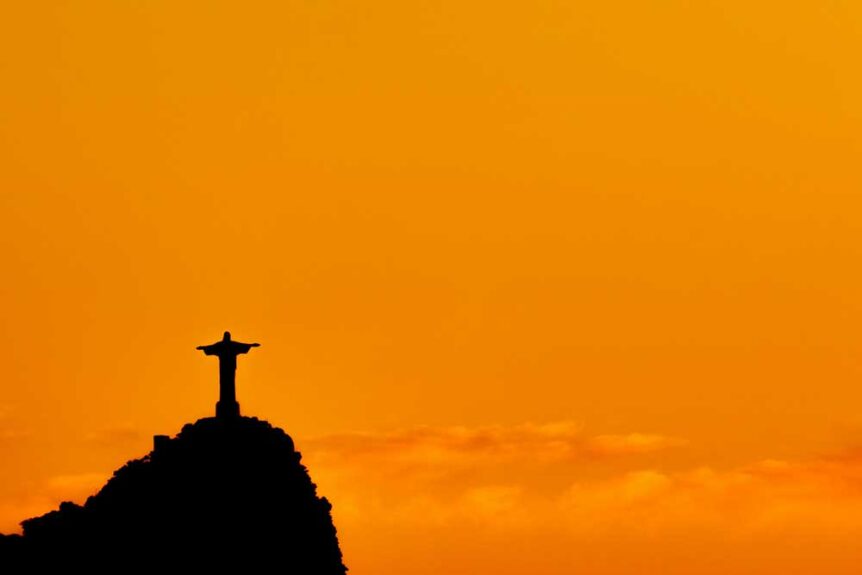
Blessed is He who comes in the name of the Lord! Blessed is the coming kingdom of our father David! Hosanna in the highest heaven! (Mark 11:9-10)
The Paradox of Palm Sunday
Palm Sunday is coming this week, and it is worth paying attention to. Pastor Tim Keller (1950-2023) said that Christ’s Triumphal Entry in Mark 11 invites us to reflect on a paradox (a contradiction containing truth on both sides). Jesus is King of kings and Lord of lords, but He showed humility and sacrificial love, not power or splendor, as He arrived in town to save us.
Scripture says: Though Christ was God, He did not think of equality with God as something to cling to. Instead, He gave up some of His divine privileges. He took the humble position of a servant and was born as a human being. When Jesus appeared in human form, He humbled Himself in obedience to God and died a criminal’s death on a cross.1
Scripture calls us to welcome Christ into our hearts, minds, and lives with the same excitement as the crowds did in Jerusalem 2,000 years ago.
Keep me Small
Author Joseph Bayly (1920–1986) wondered, “King Jesus, why did You choose a lowly donkey to carry You in Your parade? Had you no friend who owned a horse, more fitting for a king to ride? Why did You choose a donkey, a small, unassuming beast of burden trained to plow fields, not carry kings? King Jesus, why did You choose me, an unimportant person, to represent You in the world today? I’m poor and unimportant, trained to work, not serve kings. Yet You’ve chosen me to carry You in triumph in this world’s parade.” Then Bayly prayed, “King Jesus, keep me small so all people may see how great You are. Keep me humble, so people may say, ‘Praise the Lord!’ – not ‘What a great donkey He rides.'”2 Christians get it right when we shine for God. When we are humble, people see that our good deeds are enabled by the Holy Spirit.
The Bible’s Account
When the disciples brought the colt to Jesus and threw their cloaks over it, He sat on it. Many people spread their cloaks on the road, while others spread branches before the Lord that they had cut in the fields. Those who went ahead and those who followed shouted, “Hosanna! Blessed is He who comes in the name of the Lord! Blessed is the coming kingdom of our ancestor David! Hosanna in the highest heaven!” (Mark 11:7-10)
- The Palm Sunday parade took Christ to
- His agony in Gethsemane on Thursday night,
- His crucifixion and death on Good Friday,
- and His victorious resurrection on the first Easter Sunday.
The historic Palm Sunday events are recorded in all four Gospels (Matthew 21, Mark 11, Luke 19, John 12). It’s a well-known story, but let’s look closer at some details.
Fear Not
John 12:14-15 says, “Jesus sat on a young donkey. As it is written: ‘Fear not. Behold, your King is coming, sitting on a donkey’s colt'” (quoting Zechariah 9:9).
Christ takes away His followers’ fear of enemies, death, Hell, and Satan because the Palm Sunday parade led Jesus to Good Friday’s cross. There, He made full atonement for our sins and rose from the grave to show that God the Father accepted Christ’s sacrifice in place of our punishment. Psalm 22, Isaiah 53, and many other Old Testament prophecies were fulfilled in Christ’s death and resurrection.
Scripture says, “Because God’s children are human beings, made of flesh and blood, the Son of God also became flesh and blood. For only as a human being could Jesus die, and only by dying could He break the power of the devil, who had the power of death. Only in this way could Christ set free people who have lived their lives as slaves to the fear of dying.” (Hebrews 2:14-15)
Jesus’ Gentleness
Christ’s humble entry reminds us of Matthew 12 and Isaiah 42, where God says, “Jesus is My servant whom I have chosen, the One I love, in whom I delight. I will put my Spirit on Him, and He will proclaim justice to the nations. He will not quarrel or cry out. No one will hear His voice in the streets. A bruised reed He will not break, and a smoldering wick He will not snuff out, till He leads justice to victory. In Christ, the nations will put their hope.”3
Praise God, Jesus deals kindly, graciously, and lovingly with Jewish and Gentile (non-Jewish) repenting and believing sinners. Christ is not harsh. He is the God who pardons sin and forgives transgressions. Jesus does not stay angry forever, but He delights to show mercy.4
Christ looks over us, but never overlooks us. He loved us when there was nothing good to be seen in us and nothing good to be said for us. Christ loves each one of His people as if there were only one of us to love. (John Blanchard)
The Parade Leads to Christ’s Cross
Jesus’ death at Calvary (Golgotha) was no surprise to Him. This was what He came for! The Son of God came into the world to save sinners. He did not come to help us save ourselves, or to induce us to save ourselves, or even to enable us to save ourselves. King Jesus came to save us Himself! On the Cross, He accomplished His whole mission, the entire job, God’s plan of salvation!
Henry Milman’s hymn says: Ride on, ride on in majesty! In lowly pomp ride on to die.
Bow Your meek head to mortal pain, Then take, O Christ, Your power and reign.
Jesus predicted His own death and resurrection three times in Mark’s Gospel.5 “He began to teach them that the Son of Man must suffer many things and be rejected by the elders, the chief priests, and the teachers of the law, and that He must be killed and after three days rise again. Jesus spoke plainly about this.”6
Because Christ was marching to Calvary to reconcile us to God, He invited us in Matthew 11: “Come to Me, all you who are weary and burdened, and I will give you rest. Take My yoke upon you and learn from Me, for I am gentle and humble in heart, and you will find rest for your souls. For My yoke is easy and My burden is light.”7 Jesus’ open invitation is grounded and based upon His mighty saving work for repenting and believing sinners. There is room enough in Christ’s open arms for all comers.
Jesus is able to save to the uttermost (completely, perfectly, finally, and for all time and eternity) those who draw near to God through Him, because He always lives to make intercession for them. (Hebrews 7:25)
Amazing! Jesus’ cross-work and His exit from the grave are finished once for all. But He is alive forever, preserving and praying for His followers until He returns for us. Christ will come again to bring us home to Him!
Prayer
Lord Jesus Christ, help us to remember and reflect on Your humble, triumphant entry into Jerusalem on Palm Sunday. Let us also remember the path that lay before You. We thank You that You did not shrink back or turn aside. You set Your face like flint toward the cross to save us. You were unwavering, determined, and resolute in Your love for us. Holy Spirit, fill our hearts with the humility and faithfulness that Jesus displayed. Teach us to follow His example of selfless love for others. Help us to praise You in our hearts and with our lives, as we carry our crosses for You daily. Hosanna in the Highest! Amen.
You can read Christ’s Parade to Calvary (Part 2)
Notes (various Bible translations): 1 Phil 2:6-8. 2 Adapted from Joseph Bayly, Psalms of My Life; Matt 5:17. Bayly’s poems, first published in 1969, describe how God’s people can feel when our spirits are soaring high, and when we’re having very bad days. His honest discussions with the Lord are refreshing. 3 Matt 12:17-21, quoting Isa 42:1-3. 4 Micah 7:18. 5 See Mark chapters 8-10. 6 Mark 8:31-33. 7 Matt 11:28-30.